Ehler’s Danlos Syndrome and Pelvic Issues
Ehlers-Danlos Syndrome (EDS) is a group of 13 genetic connective tissue disorders that can affect multiple systems throughout the body. People living with EDS are often unfortunately familiar with joint pain, joint dislocations or subluxations, significant fatigue, Postural Orthostatic Tachycardia Syndrome (POTS), and frustrating gastrointestinal symptoms.
What can come as an unpleasant surprise, however, is the onset of pelvic floor dysfunction. Many people with EDS experience symptoms such as pain with intercourse or pelvic exams, lower abdominal pain, urinary urgency and frequency, constipation, and pelvic organ prolapse. Some people may even notice pain when the urge to urinate arises or random pelvic pain throughout the day.
While more research is still needed to fully understand why these symptoms occur, one theory involves the increased laxity of ligaments and connective tissues in the pelvis. When the ligaments that help support the joints are more elastic or “stretchy,” the pelvic floor muscles often tighten to compensate and create additional stability. Over time, this constant muscle tension or gripping can contribute to pain, urinary symptoms, bowel dysfunction, and difficulty relaxing the pelvic floor muscles appropriately.
Increased laxity in the pelvic region may also contribute to pelvic organ prolapse, where organs such as the bladder, uterus, or rectum descend and place pressure into the vaginal wall.
When these symptoms occur, many feel frustrated, overwhelmed, or alone. Fortunately, there are treatment options that can help improve symptoms and quality of life.
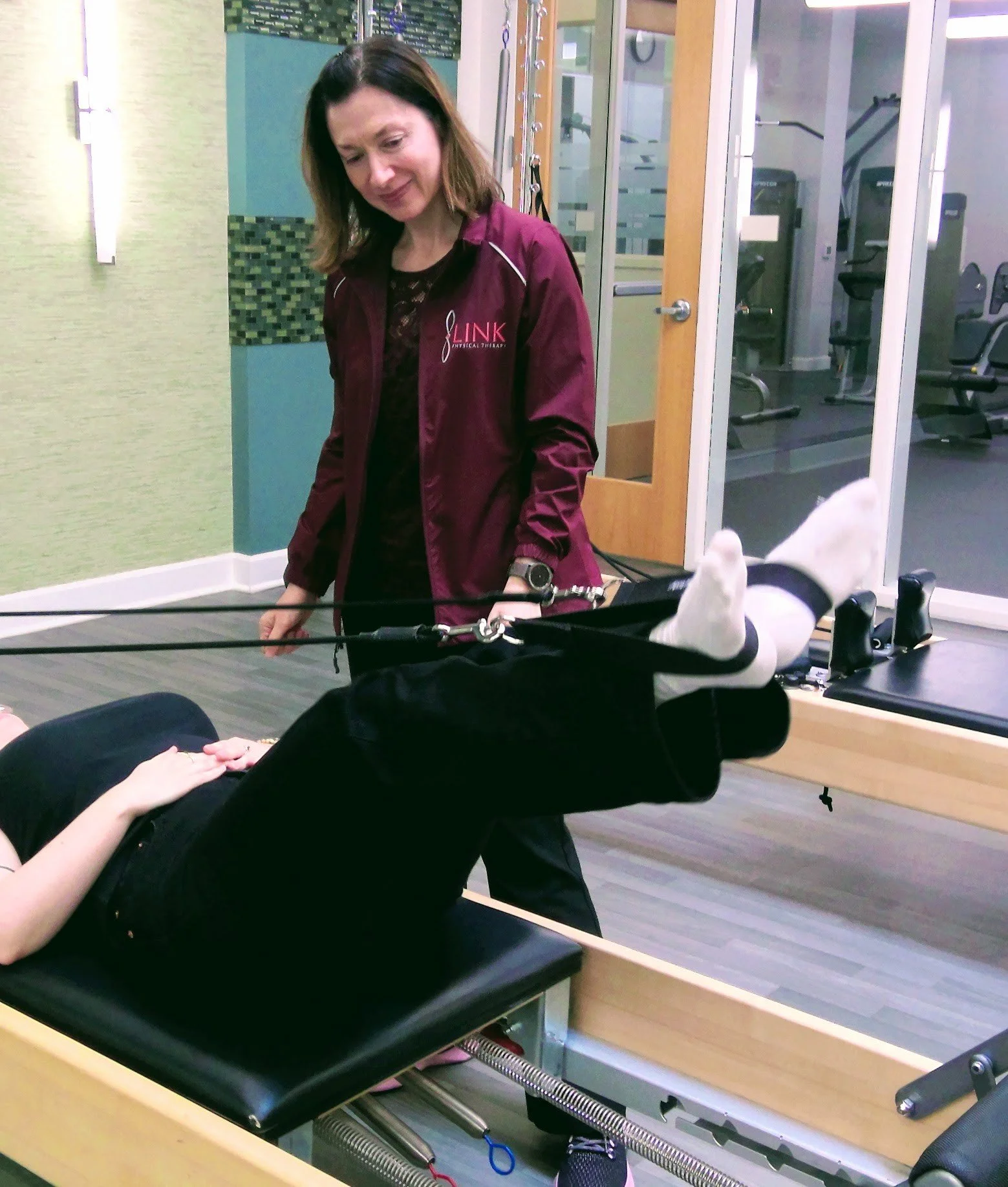
Pelvic physical therapy is often an important part of treatment for people with EDS. Pelvic PT can help reduce pelvic floor muscle tension, which may decrease pain and improve urinary urgency, frequency, and constipation symptoms. For pelvic organ prolapse symptoms, pelvic PTs can also teach strategies to better manage intra-abdominal pressure to reduce downward strain on the pelvic organs. Treatment often includes education on breathing, relaxation strategies, neuromuscular retraining and biofeedback, gentle strengthening, body mechanics, and techniques patients can use at home to better manage flare-ups.
Because EDS can affect so many systems in the body, pelvic PTs often work closely with gynecologists, gastroenterologists, pain management specialists, and other healthcare providers to provide more comprehensive care.
If this sounds familiar, know that you are not alone—and that help is available! Our physical therapists at Link PT specialize in pelvic health with expertise in EDS. People living with EDS deserve compassionate, knowledgeable healthcare and the support needed to feel more comfortable and confident in their bodies.
Contact us to schedule a full PT evaluation or a free 15-minute PT consultation so that you can start to live life better!